THE PRINCIPLE
Coils and magnets
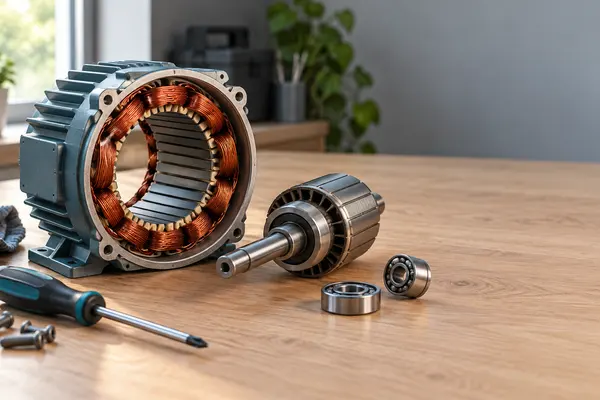
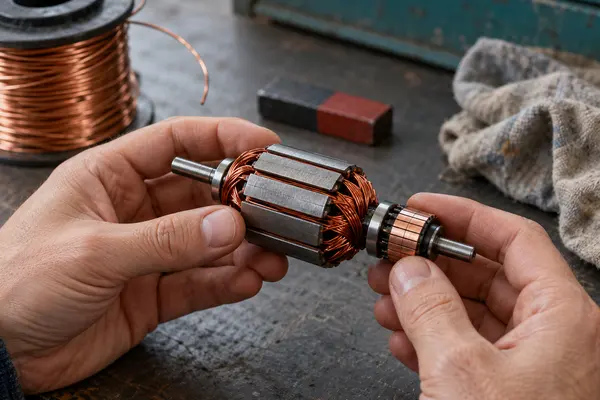
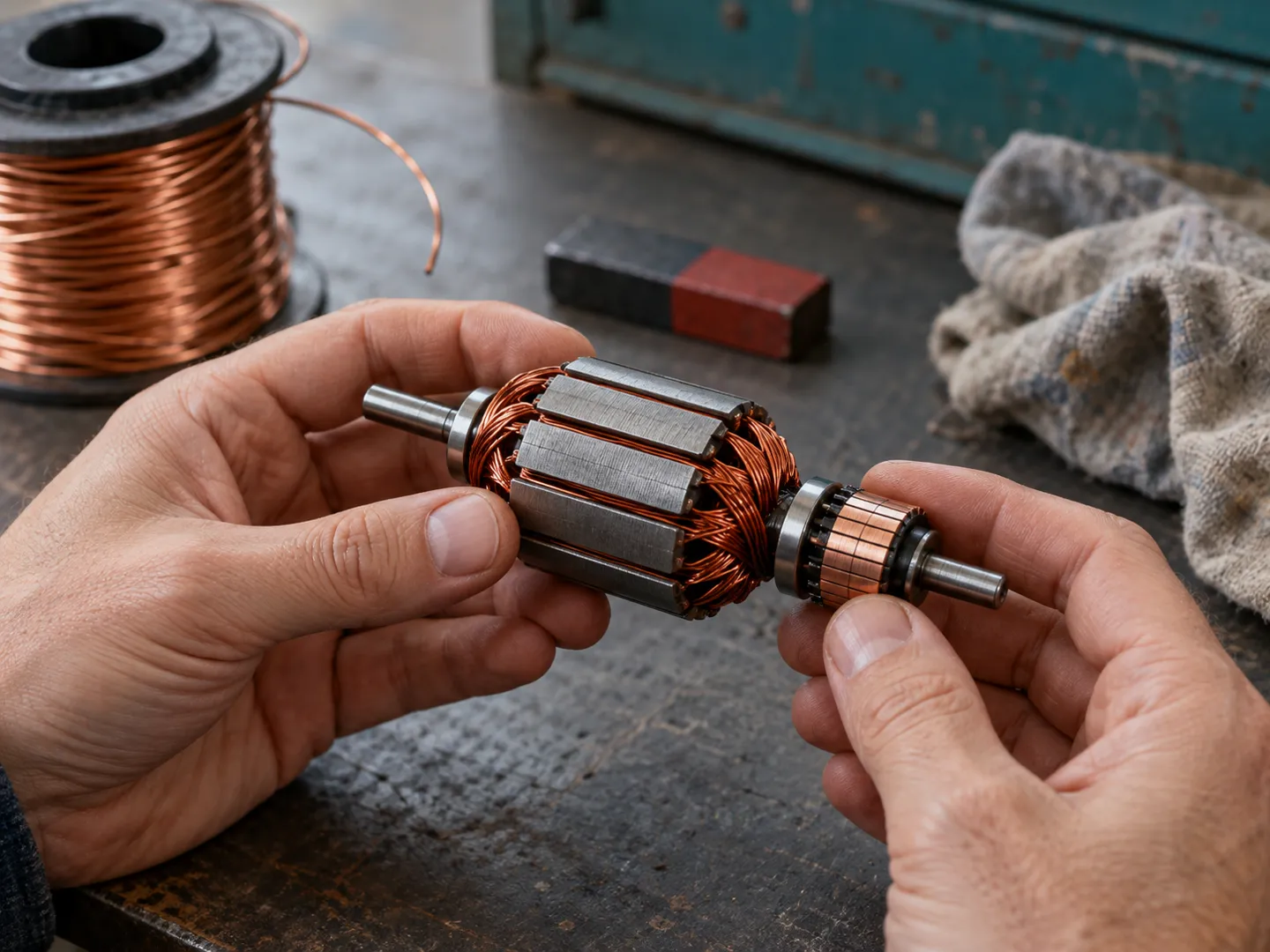
Current through coils of copper wire sets up a magnetic push against the magnets or field around it, and the rotor turns.
Where it began doodlemotor
HOW THINGS MOVE
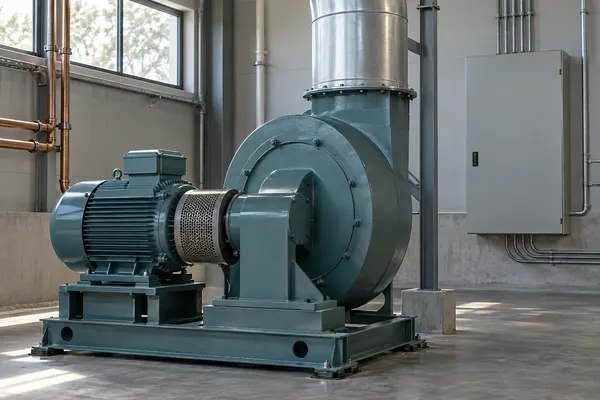
The quiet machine behind fans, pumps, lifts and trains.
Try the fan speed check
53%of world power
Electric motor systems use about half of all the electricity the world consumes. Here is how a motor turns current into turning, what the efficiency labels mean, and why the speed it runs at matters so much.
Plain English, with the sources linked.
Updated
THE SHORT ANSWER
Every electric motor relies on one idea:
a current in a magnetic field feels a force.
THE PRINCIPLE
Current through coils of copper wire sets up a magnetic push against the magnets or field around it, and the rotor turns.
Where it beganTHE LABEL
From IE1 upwards, a higher IE number means less energy lost as heat. EU rules now set IE3 as the floor for most motors.
Why it adds upTHE BIG LEVER
For fans and pumps, power follows roughly the cube of speed, so running a little slower saves a lot.
Try the checkA QUICK FAN SPEED CHECK
Pick a speed for a fan driven by an electric motor. The figure is the ideal fan law, power proportional to speed cubed, which the US Department of Energy uses to explain why variable speed drives save energy.
These are ideal figures. Real systems save less, because of motor and drive losses and any fixed pressure the fan must overcome.
TWO NUMBERS WORTH KNOWING
One motor seems minor. Billions of them,
running for years, are not.
53%
Used by electric motor systems
The International Energy Agency’s 4E Electric Motor Systems Platform reports that motor systems were responsible for 53% of global electricity consumption in 2023.
WORLD ELECTRICITY · 2023
2% vs 98%
Purchase price against total cost
The US Department of Energy estimates that the purchase price may be just 2% of a motor’s total installation and operating costs; energy and maintenance make up the other 98%.
ONE MOTOR · ITS LIFETIME
That is why efficiency rules focus on motors: a few percentage points of efficiency, multiplied across years of running, outweigh the price on the box.
BEFORE YOU BUY
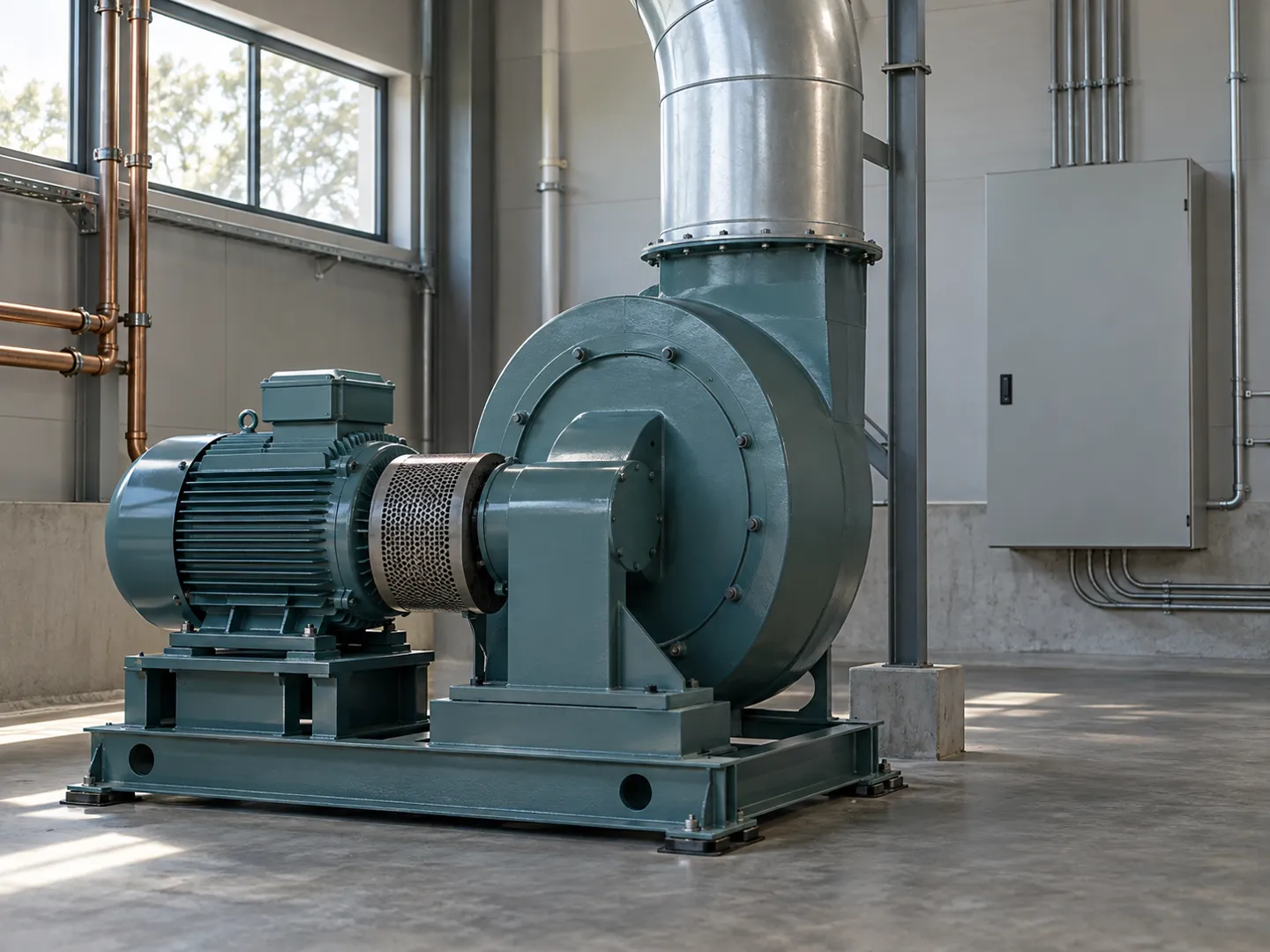
Look for the efficiency class on the specification. A higher IE number means less energy wasted as heat for the same work.
The US Department of Energy says premium efficiency motors are especially cost-effective when they run more than about 2,000 hours a year.
For fans and pumps that do not always need full flow, ask a supplier whether speed control would suit the job.
Compare running costs as well as prices. Over a motor’s life, the electricity usually dwarfs the purchase price.
MOTOR FACTS
On 3 September 1821, Michael Faraday made a current-carrying wire move continuously round a magnet at the Royal Institution in London. He called it electromagnetic rotation; it was the first electric motor.
Electric motor systems were responsible for 53% of global electricity consumption in 2023, according to the IEA 4E Electric Motor Systems Platform.
Since July 2021, EU Ecodesign rules have required three-phase motors rated from 0.75 kW up to 1000 kW to reach the IE3 efficiency level. Since July 2023, motors from 75 kW to 200 kW must reach IE4.
The European Commission puts the average efficiency of motors in the EU at 88.8% in 2020, up from 85.7% in 1990.
For fans and pumps, input power varies with the cube of speed. The US Department of Energy notes that cutting speed by 20% can reduce input power by about 50%.
QUICK QUESTIONS
Short answers to the questions people ask most.
A current flowing through a wire in a magnetic field feels a force. A motor arranges coils of wire and magnets so that this force keeps pushing the rotor round. Michael Faraday first produced continuous motion this way in 1821.
Michael Faraday, at the Royal Institution in London, on 3 September 1821. His apparatus made a current-carrying wire move round a magnet in a bath of mercury, an effect he called electromagnetic rotations.
They are international efficiency classes for motors, from IE1 upwards; a higher number means a more efficient motor. Since July 2021, EU rules require most three-phase motors from 0.75 kW to 1000 kW to reach at least IE3.
For fans and pumps, flow rises with speed but the power needed rises with roughly the cube of speed. The US Department of Energy notes that a 20% cut in speed can cut input power by about 50%. Real-world savings are usually somewhat lower.
Often, for motors that run many hours. The US Department of Energy estimates the purchase price may be only about 2% of a motor’s total installation and running costs, and says premium motors are especially cost-effective above about 2,000 hours a year.
A NAME WITH MOMENTUM
doodlemotor.com is part of the DoodleSale portfolio. It isn't in an auction right now, but you can ask about leasing it.